October marks two-and-a-half years since I became Artistic Director of the Royal Academy of Dance. In that time, I have learnt that there is an enormous judgement call surrounding how best to meet the needs of today’s learners and teachers whilst balancing and respecting what has come before us.
Sometimes, as with our pioneering Musical Theatre syllabus, a completely new product needs to be written and designed. But not everything needs to start from scratch. Part of this role, and all our roles as custodians of an artform, is understanding what should be protected, while recognising that heritage work needs to evolve to meet the aspirations of today’s dancers and audiences.
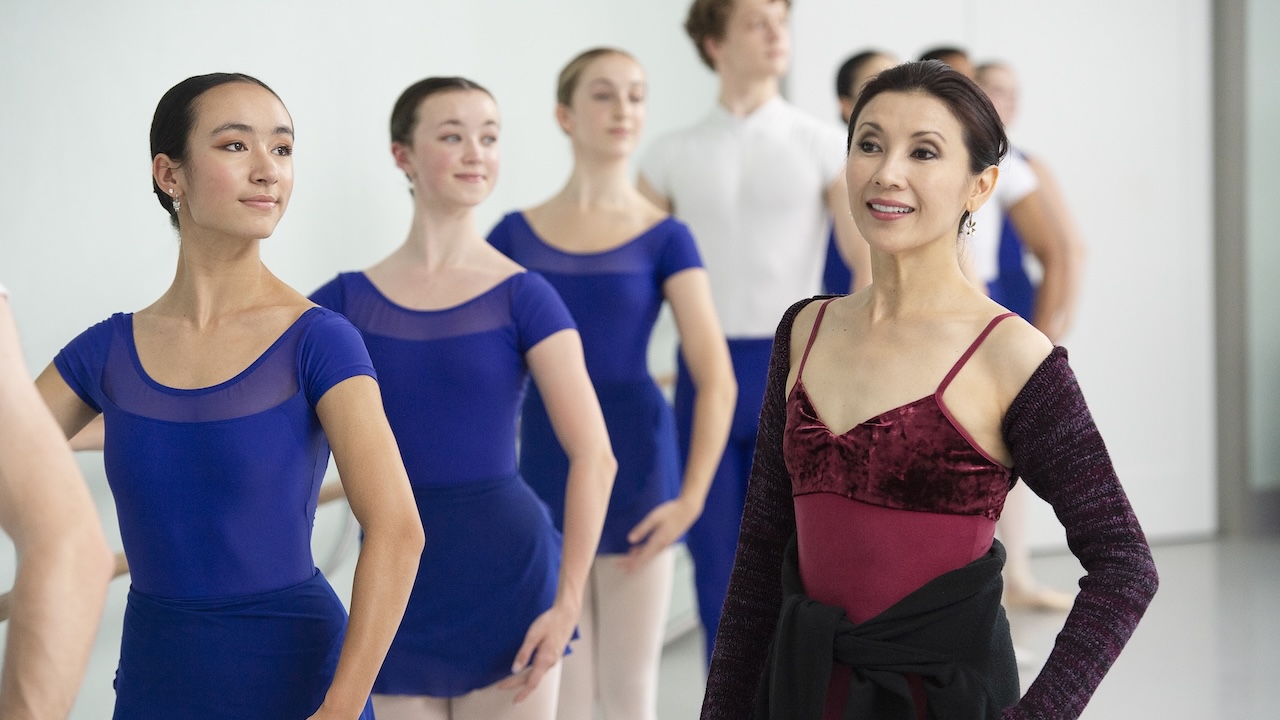
Recently, I was delighted to be in a position to plan and carry out the creation of video resources to support teachers and students engaging with the Grade 6, 7 and 8 syllabi. Introduced in the mid-1990s, the Higher Grades syllabus has long been a valued and distinctive part of the RAD’s examination offer and enjoyed by a wide range of learners across the world.
While the content itself has stood the test of time, the original filmed resources no longer met current expectations, so we had a wonderful opportunity to revisit the work and make sure we were meeting the needs of participants and teachers.
‘When decision time arises, we ask ourselves: what will be of most benefit to our learners?’
First question: did we need to create a new syllabus? No! What we had was rooted in wonderful foundations and is absolutely relevant today. The music and its relationship to the movement is wonderful, so too the use of character work to further enhance performance quality and deeper understanding of presentation.
The team have made some subtle tweaks, all with the purpose of aligning with current expectations and needs. But those changes couldn’t be made without in-depth understanding and knowledge of the original ethos. We had the benefit of working closely with some of the original panel, but it’s not just about access to information – it’s also about approach. I was delighted that the lead on this project, our Chief Examiner Jennifer Hale, referenced the words of one of the original creators: ‘think more about “movement” than “positions”; let it come from the heart first and the muscles second.’
Determining when to stick or when to twist is a judgement call but I’ve found that by having clear guiding principles – that is, ‘the heart’ – the path we need to take becomes clear.
In the last two-and-a-half years my guiding principle – my heart – has become clearer and more easily accessed when decision time arises. ‘What will be of most benefit to our learners?’ Whenever we reach a 50/50 call this is the question we ask ourselves – and it has unlocked many a difficult decision!