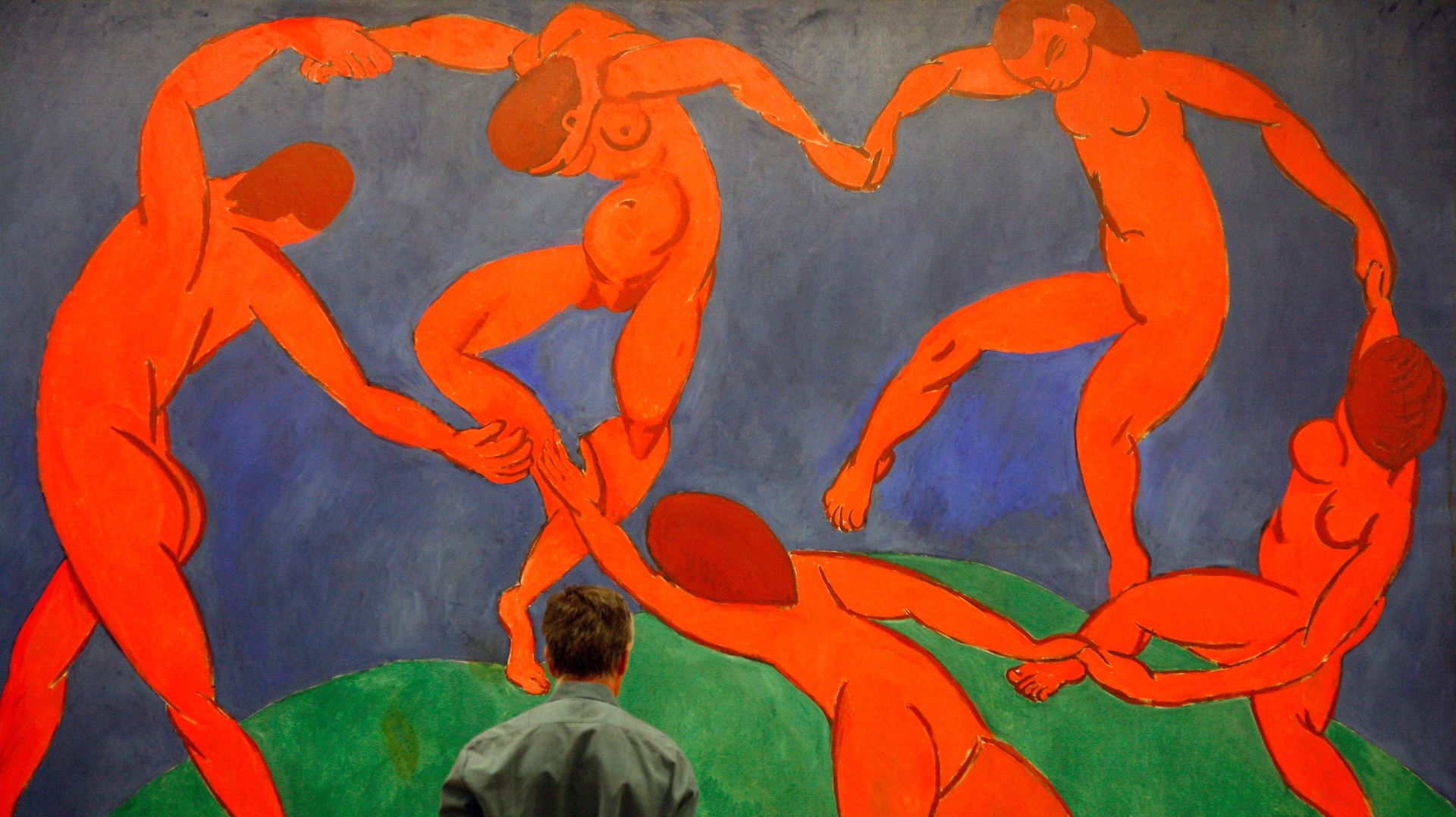
When Henri Matisse painted La Danse in 1910, he wanted to represent not simply a dance, but dance itself, in its primal form. The painting is duly elemental: just earth and air by way of background, the dancers represented as basic outlines of limbs and torsos, their faces hidden or rudimentary as if to emphasise shared physicality rather than individual personality. The colours are simple and saturated, filling the figures with vital force. And the form that the dance takes is a circle.
Of course it is. That’s not only because Matisse took inspiration from a particular circle dance – the sardana – that he had witnessed on a trip to southwest France in 1905, in search of primordial forms and feelings. It’s also because the circle seems so self-evidently central to dance and dancing that we hardly ask why that might be. So let us ask: why might that be?
‘The circle is foundational to folk dance, embodying a community ideal’
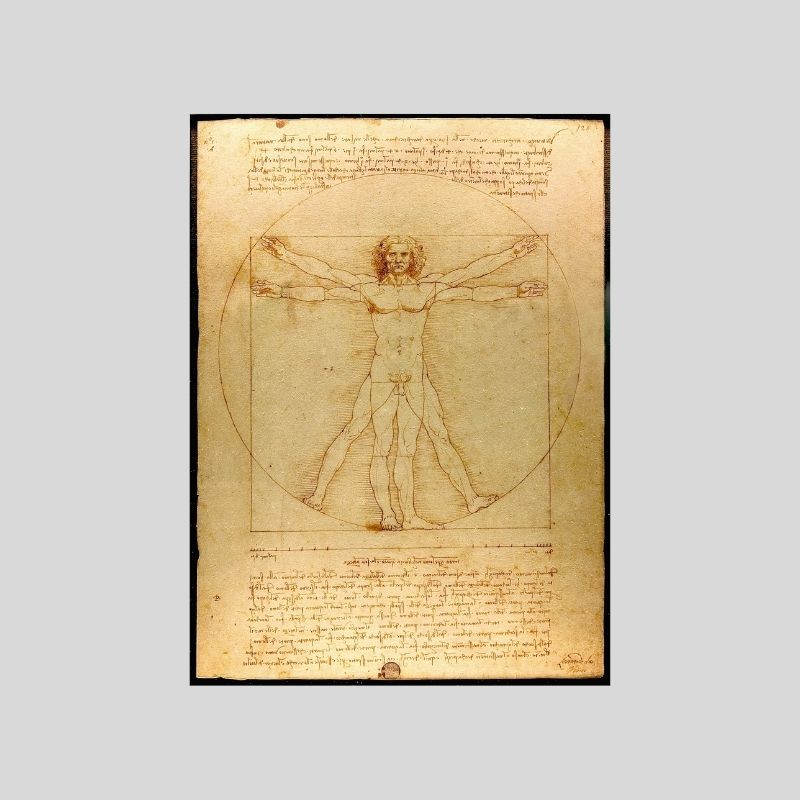
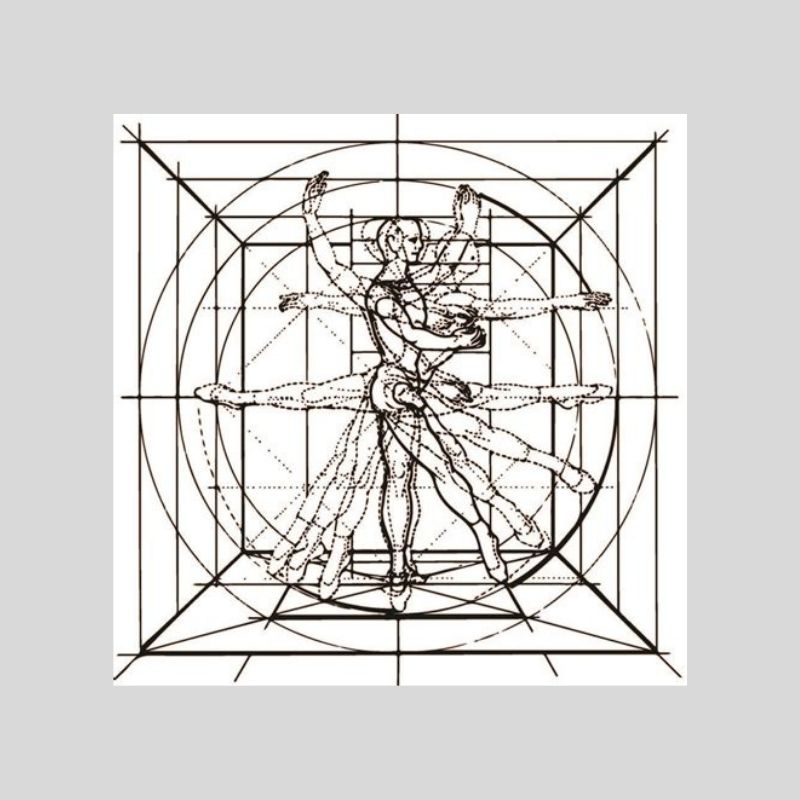
A dance teacher I know gave me one answer, that I treasure: it starts with anatomy. Look at the human body, she said, and you’ll notice that the shoulders and hips are rotational ball-and-socket joints. In different ways, the neck, wrists and ankles are also rotational, and the spine itself is made of discs, designed to twist as well as flex and extend. In short, if you want to move your body, then even before you take a single step you will likely be moving in circular motions of some kind. You can see that anatomical circularity in Leonardo Da Vinci’s Vetruvian Man, where the compass of the human body extends to a circumference line; or in Rudolf Laban’s idea of the kinesphere, which maps the gyroscopic space of motion around the axis of the body.
Anatomy is one answer; society is another. The circle is foundational to folk dance, embodying a community ideal within its very geometry: all points are equidistant from its centre. In coming together in a circle, people join a common action that is performed by, for and with each other, without rankings of front to back or first to last. The sardana is just one of countless circle dances that both represent and enact an egalitarian, participatory vision of democracy – formations made by the people, for the people.
Turn from folk dance to ballroom dance, and you find a more modern form of circle dance. Here people may dance in couples but the couples themselves move around the floor in a circle known as the ‘line of dance’ – ‘line’ referring to direction (anticlockwise, by convention) rather than to a connection between two points. The most circular of all these dances is also the most famous: the waltz, where the dancers continually turn in pairs while simultaneously circumnavigating the dancefloor.
‘Before you take a single step you will likely be moving in circular motions’
A marvellous illustration of the difference between walking lines and waltzing circles is the dance scene from the 1991 film The Fisher King, where New York’s Grand Central Station transforms from a rush-hour hubbub, with everyone trying to move in lines towards their destinations, into a ballroom filled with waltzing couples. Two people remain walking: the lover (Robin Williams), and the object of his desire (Amanda Plummer), both oblivious to the fact that around them time has suspended, and the commuters have fallen into each other’s orbits to form rotating couples of all kinds and combinations. The clock strikes, the rapt circlings melt back into directional lines, and the bubble of romance dissolves.
Let us turn again, towards a different point about the circle and society. While the circle can embody an egalitarian ideal, it is also built on an intrinsic division: between centre and periphery. Those at its centre occupy a focal point; those at its edges are marginal. In the arena or the circus, this is the model of spectatorship: performers in pole position, audience ringed around them.
Other forms of spectatorship turn this intrinsic division towards different ends. Think of the common formation where people gather in a circle and take turns to perform in its centre. In hip hop they call this a cypher, and I asked Bruno Perrier, a performer and teacher with London-based street dance company Boy Blue, how it feels to participate in it. The centre, he explains, is a place to show and experiment, to try out moves and see how they land. The periphery is a place of appreciation and encouragement, where you urge the performers to do their best and applaud their achievements. It is a highly dynamic exchange, with no durable division between them and us: in taking turns and changing places, the participants both offer and receive the gifts of performance and attendance.
These days though, by far the most common forms of spectatorship are the proscenium stage and the flat screen, both of which draw a line between performer and audience, and measure the performance space with the perpendicular axes of front to back and side to side. Linear forms proliferate in this environment while the circle, in acquiring a front and a back, a near and a far, loses its essential quality of equidistance. Circles don’t disappear from the stage, of course: the balletic manège, for example, draws its freewheeling force directly from its circular path. But even the manège needs an endpoint, and so finishes with a line of some kind, whether lateral or diagonal.
The screen has one means to circumvent this limitation: the top shot, a viewpoint that can restore the circle’s axiomatic geometry. Indeed, the top shot became a signature mark of that most cinematic choreographer-director, Busby Berkeley, who used it for kaleidoscopic dance numbers in films such as 42nd Street, Gold Diggers of 1933, Dames, Footlight Parade and Million Dollar Mermaid.
Among contemporary choreographers, perhaps Belgian Anne Teresa De Keersmaeker has most tenaciously pursued the circular form in dance. In her 1981 solo Violin Phase – made while she was still a student in New York, and which she later called ‘the core that contained everything that followed’ – her steps map a circumference and its radiuses, the weighted swirl of her skirt traces arcs, and Steve Reich’s music loops in cycles. The solo was later performed on sand, rendering the wheel of its composition as visible footprints, and it has been performed in museums where spectators could watch from above. A marvellous 2002 film version by Thierry de Mey mobilises the camera to give vertiginous viewpoints onto its circularity.
‘I became obsessed with circles, spirals, and ellipses. They are everywhere in nature’
Anne Teresa De Keersmaeker
Having started with circles, De Keersmaeker went on to encompass spirals, a form she describes as ‘a circle that opens and closes’. Through works such as Drumming and Rain, the diptych En Atendant and Cesena, Vortex Temporum and her latest work GLA55, she has used circular forms to reconfigure the geometry and temporality of the stage itself, and to evoke nature, the cosmos and mysticism. ‘Since the beginning I became obsessed with circles, spirals and ellipses,’ De Keersmaeker said in a 2026 interview. ‘They are everywhere in nature, in the cosmos, in sunflowers, in shells, in tornadoes.’
Circles are indeed everywhere. Even when we are static we remain moving in circles, grounded on a spinning planet in orbit around a single sun within a galactic vortex. Circles are both concrete natural phenomena and numinous cosmic ideals – central to dance not only because of anatomy, society, art or nature, but also because we intuit our moving world as a kind of dervish dance, to the music of the spheres.

Sanjoy Roy writes on dance for the Guardian and is editor of Springback Magazine.