Inside an empty theatre in Ilsan, just outside Seoul, the mood is split in two.
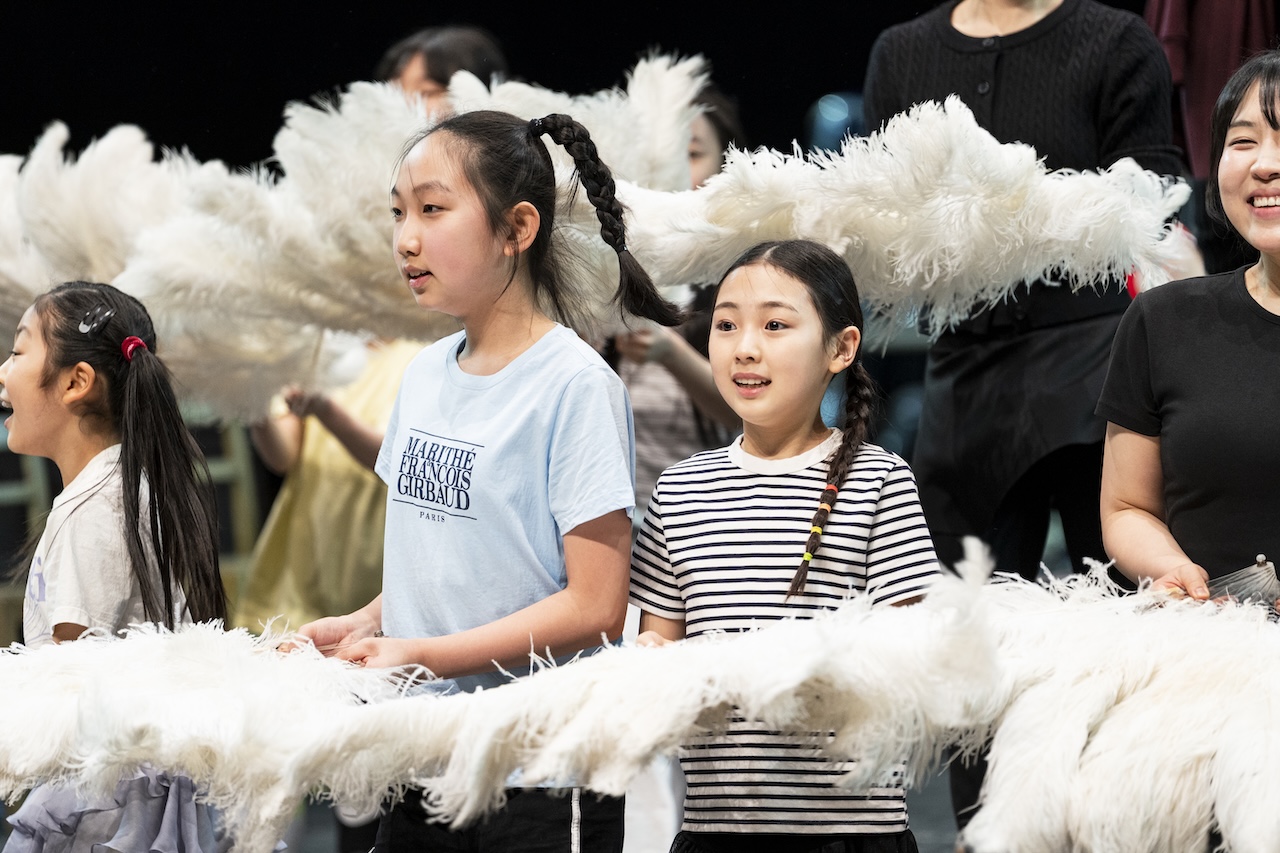
Backstage, dozens of children laugh and playfully chat with one another between racks of costumes and carefully arranged props. Just a few steps away, the adults stand in quiet concentration, watching, waiting. Then the cue comes. The laughter stops.
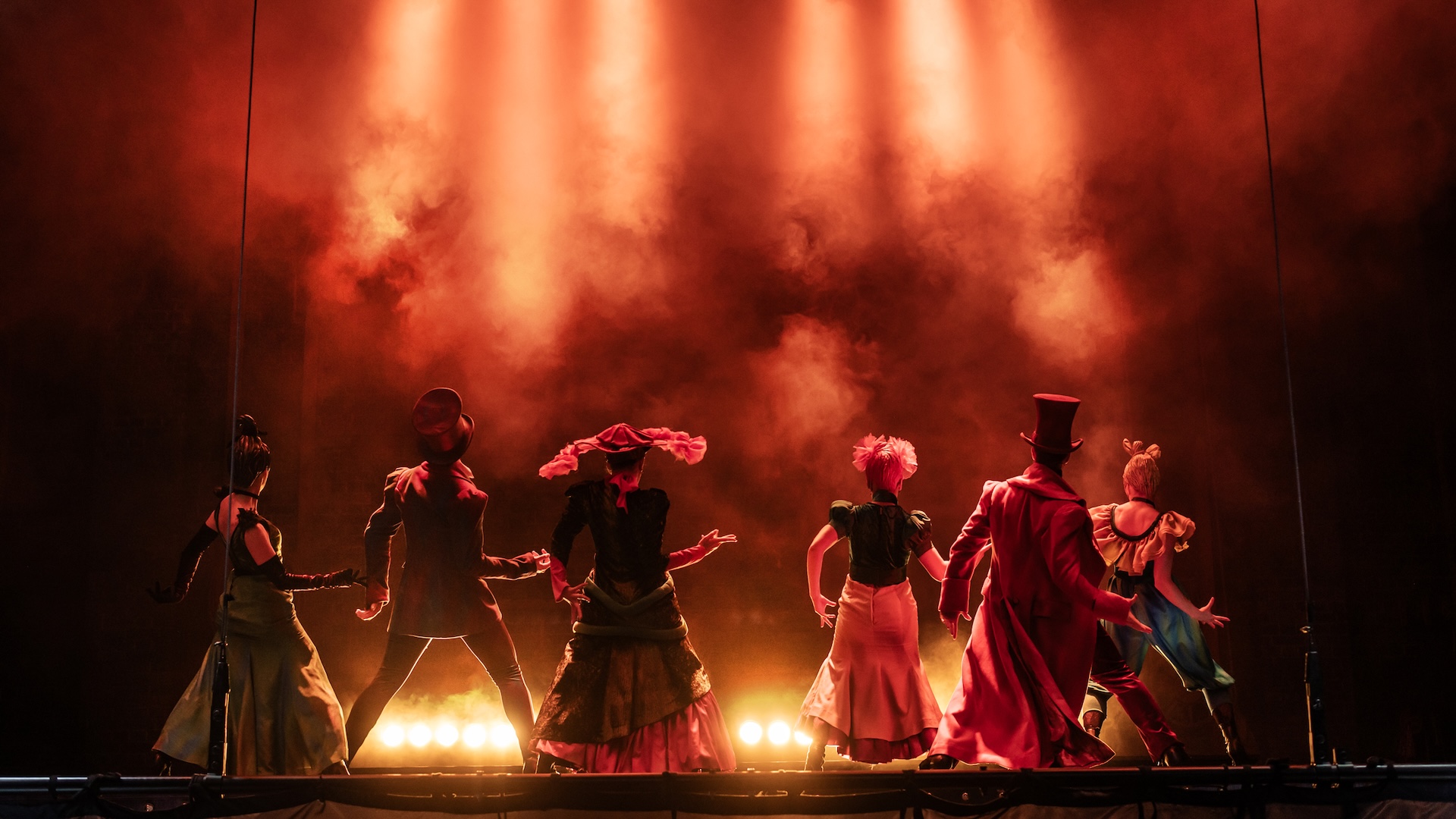
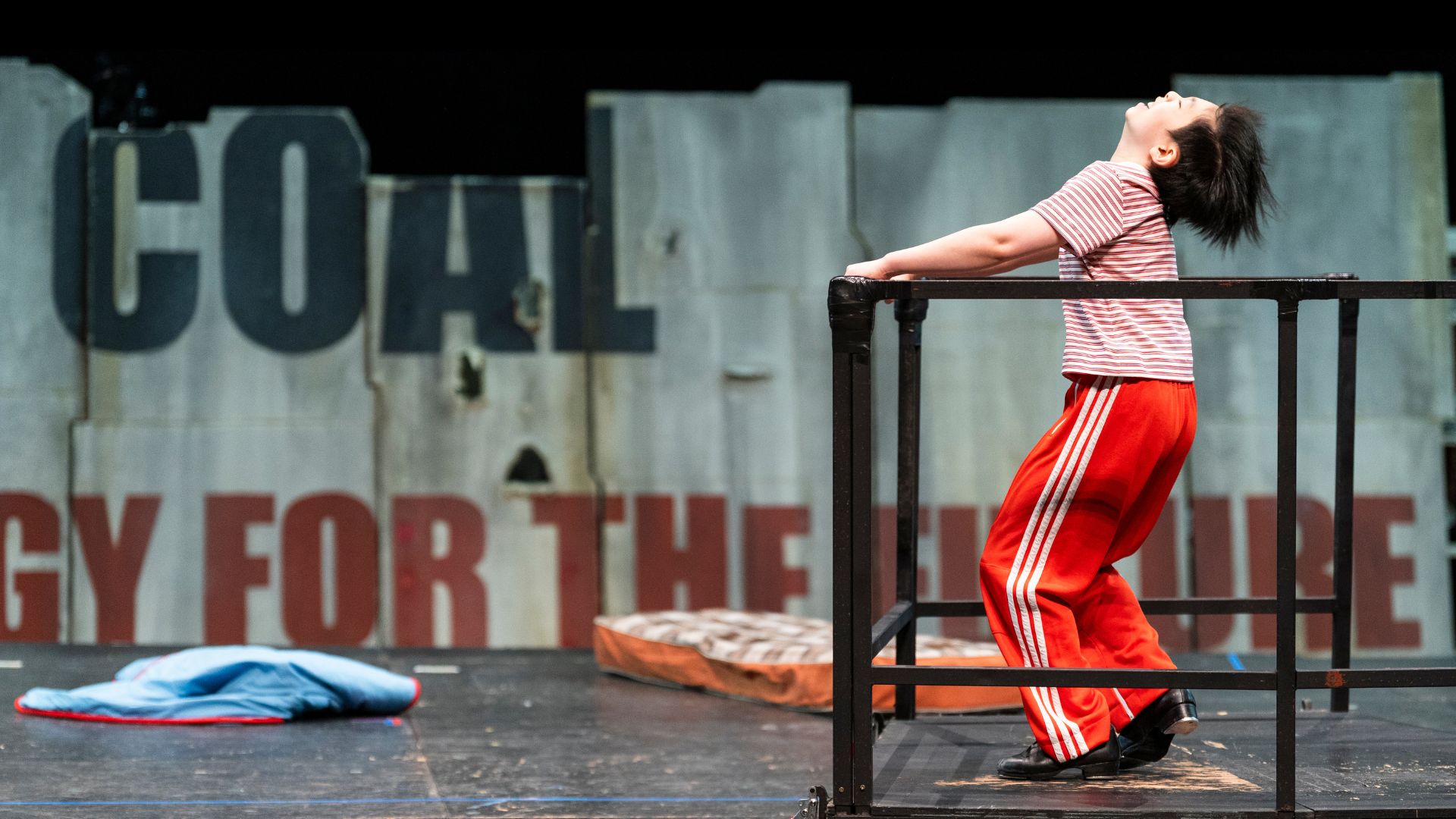
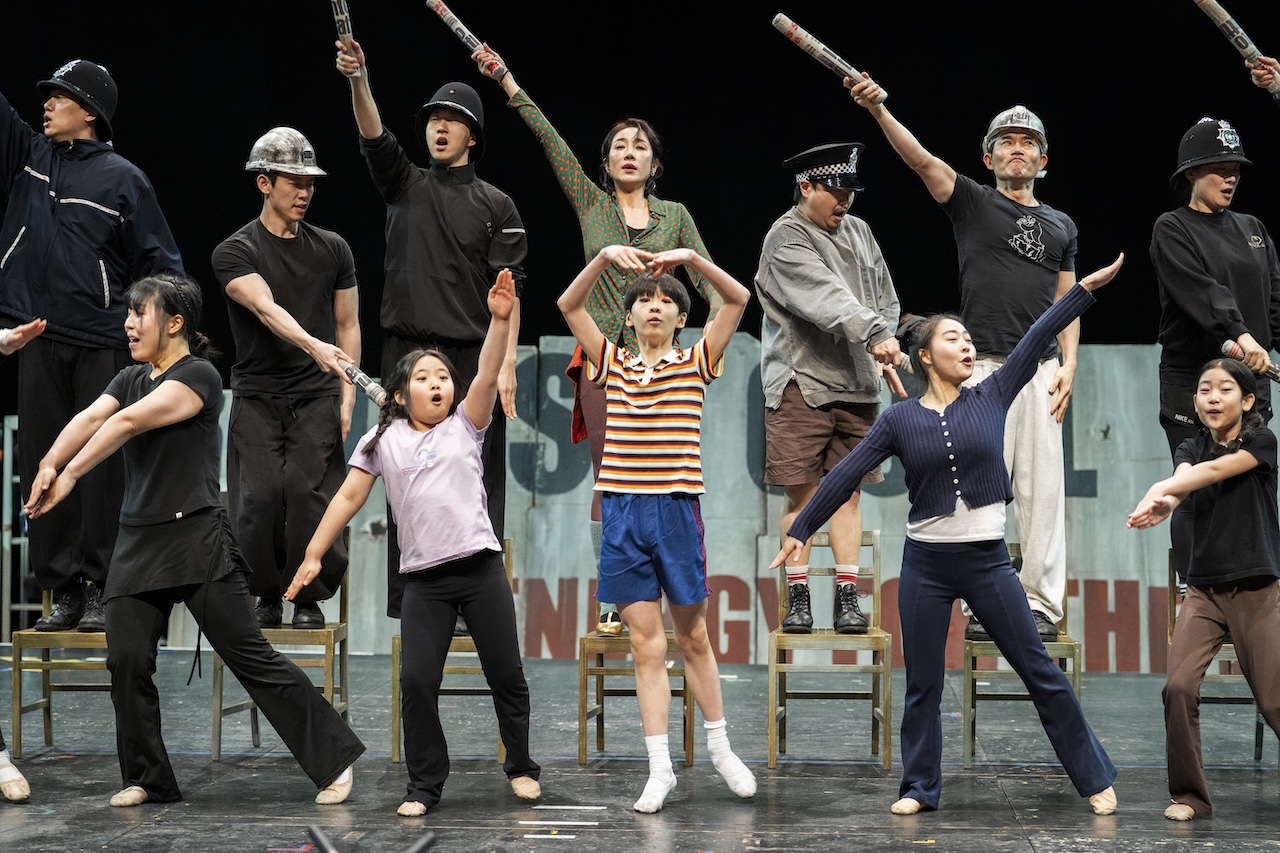
On stage at the Grand Theater of the Goyang Aram Nuri Arts Center – a cavernous, 1,900-seat venue – the children reappear transformed. In a set evoking a 1980s coal mining town in northeast England, their movements sharpen into synchronised choreography, their voices steady into confident song. What moments ago felt like play now carries the weight of something far more exacting. It is hard to remember that most of them are under 13.
They are stepping into a legacy shaped by the 2000 film Billy Elliot, written by Lee Hall, which became a global success, earning multiple BAFTA wins (14-year-old Jamie Bell, playing Billy, received Best Actor) and Oscar nominations. The 2005 stage adaptation, featuring music by Elton John, would go on to dominate both the West End and Broadway, collecting Olivier and Tony Awards along the way.
Now, it returns to South Korea for its fourth season, where the challenge is not just to replicate a global hit, but to reimagine it.

‘I practiced through blood, sweat and tears’
Cho Yoon-woo
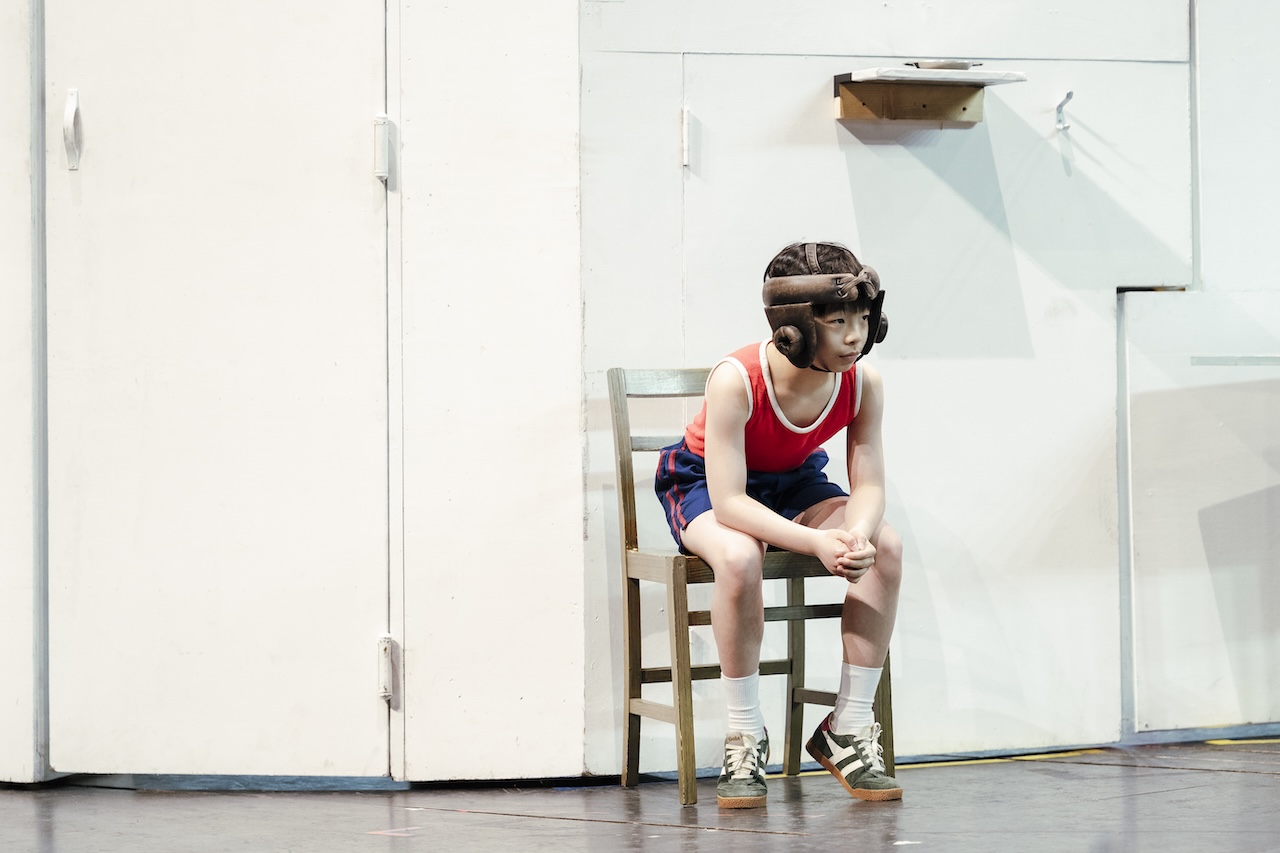
Showcasing four scenes from the musical for the press and family members, nerves and excitement are in the air. ‘I practiced through blood, sweat and tears,’ Cho Yoon-woo, the youngest of the Billys said after the rehearsal. ‘I’ll do my best to make sure that effort doesn’t go to waste.’
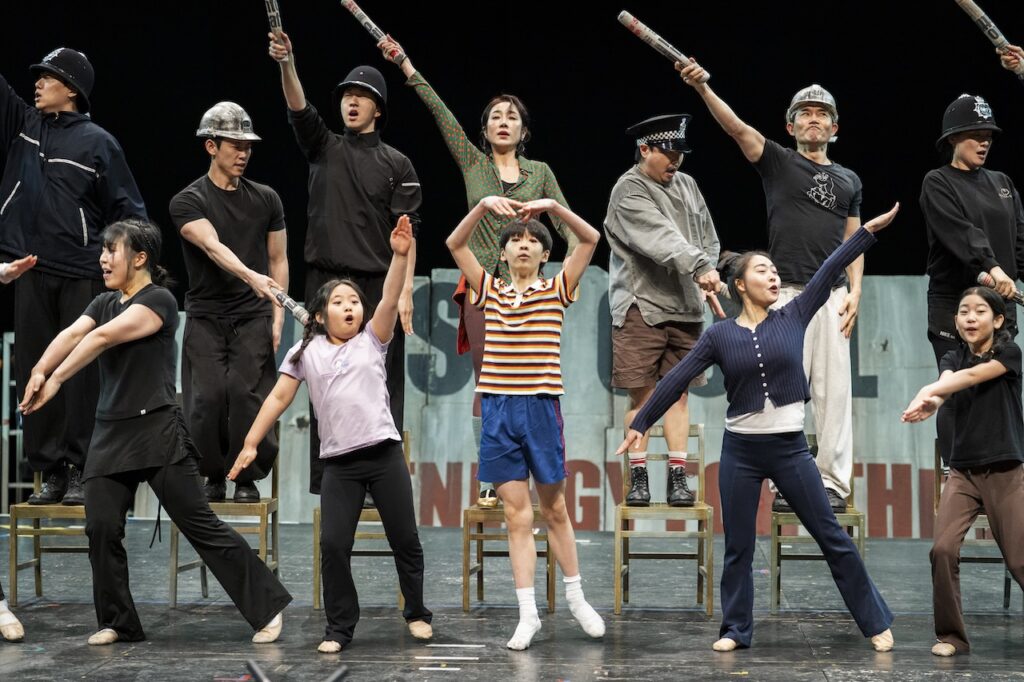
There were 240 applicants for the role of Billy when auditions began in 2024, followed by multiple rounds of selection, then nearly a year of intensive preparation. Many of the boys begin with little formal experience in ballet or tap. The so-called ‘Billy School’ puts them through six-hour training sessions, six days a week. Alongside classes in ballet, tap, jazz and acrobatics, the Korean team shares rehearsal footage with the international creative staff, allowing them to monitor progress and shape the training together.
‘Every new production is unique. It makes it more exciting for the audiences’
Ed Burnside
Ed Burnside, the production’s international associate director, insists that precision alone is not the goal. ‘One of the great things about every new production is that it’s unique,’ he says. ‘It’s tailored to the specific things that the actors bring to the table. There is a bit of a trend in theatre where productions have to be exactly the same every single time. For me, that feels a little bit like it lacks a life force and vitality. But by matching the performances to these actors’ personalities, we can find a way to make it more exciting for the audiences.’

The return of Billy Elliot comes at a moment of rapid expansion for South Korea’s musical theatre industry. In 2025, musical ticket sales reached approximately 499 billion won, placing the country among the world’s most active markets. Alongside Billy Elliot, major productions such as Frozen, Six and The Phantom of the Opera are filling large venues across Seoul this year.
At the same time, South Korean originals are gaining international recognition. Maybe Happy Ending made history at the 2025 Tony Awards, winning six prizes including Best Musical – marking a significant shift from South Korea as an importer of western productions to a creator in its own right.
Few performers have witnessed this transformation as closely as Choi Jung-won. Now 56, she plays Mrs Wilkinson, Billy’s teacher who helps the boy realise his dream. Known to many as ‘Jackie,’ Choi has performed in more than 1,000 shows of Mamma Mia!, even being invited by Abba to perform in Sweden in 2008 after being recognised as the ‘world’s best Donna’ by the musical’s associate director Paul Garrington.
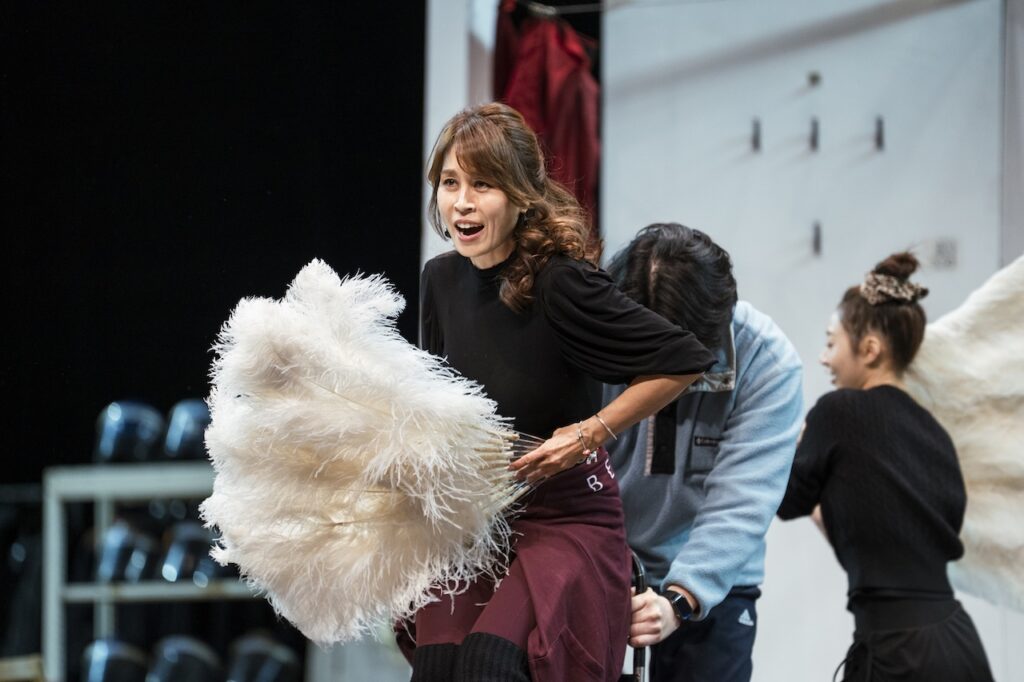
‘When I started in 1987, my friends didn’t even know what a musical was,’ she tells me, laughing. ‘Now you see them everywhere – on billboards, on buses.’ What amazes her most is not the visibility, but the infrastructure. ‘Back then, performers came from theatre, dance or vocal departments. Now, almost every university has a musical theatre programme.’
For Choi, Billy Elliot is more than another production. It is deeply personal. ‘I grew up in a hillside neighbourhood, dreaming of becoming an actor,’ she says. ‘So this feels like a defining work for me. And through it, I’ve found a kind of healing.’ She pauses, then adds: ‘It’s not just me – audiences leave the theatre carrying that same emotion. That’s the power of theatre.’
Even with the demands of rehearsing her role four times over – once with each Billy – Choi Jung-won shows no sign of fatigue, her joy for the stage undimmed. Even as she waits in her dressing room, her singing drifts out into the hallway.
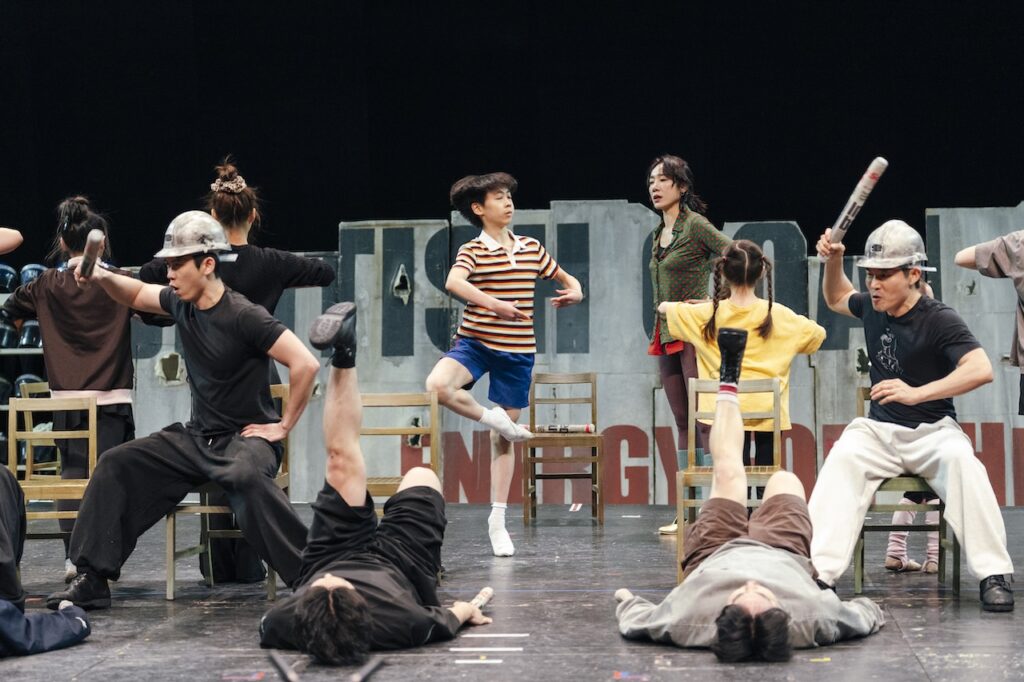
For Burnside, the ‘enthusiasm’ and ‘passion’ of the South Korean cast place the production in a league of its own. ‘There’s something about the Korean cast’s understanding of this show,’ he says. ‘They connect with it on a deeper level.’ He points to the historical parallels: Britain in the 1980s, marked by labour struggles and economic upheaval alongside South Korea’s own period of rapid industrialisation, protests and generational change. ‘When I speak with older cast members, we often talk about how similar those histories feel,’ he says.
But beyond politics, there is something more immediate. ‘The sense of community, of family – that’s central to this piece,’ he adds. ‘There’s something about Korean culture that seems to respond to these themes very similarly to the way that Northern English culture feels it.’
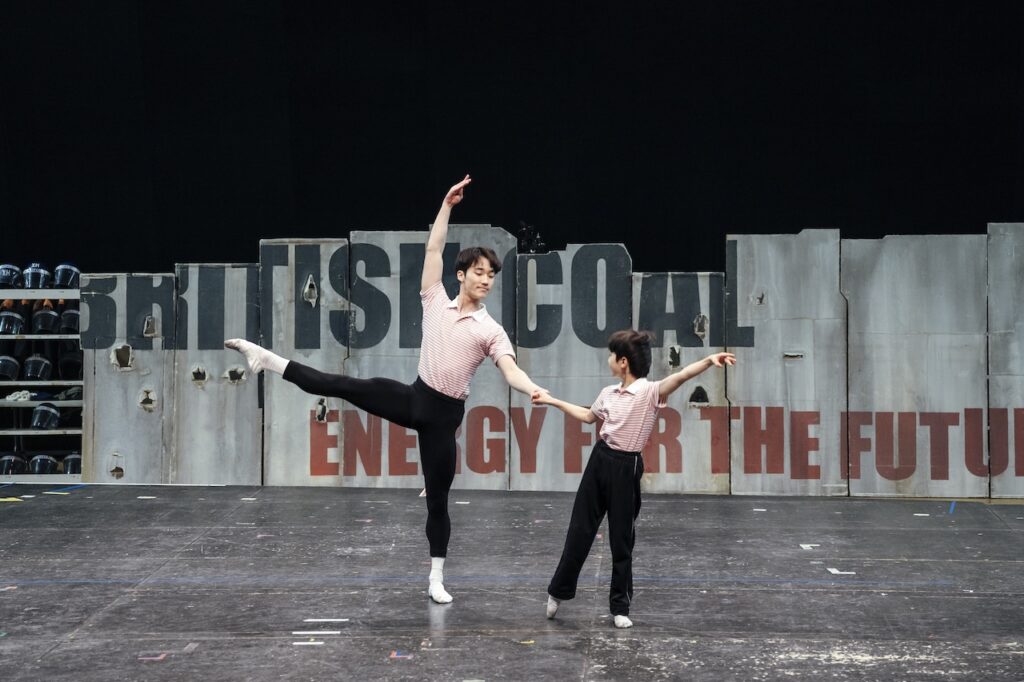
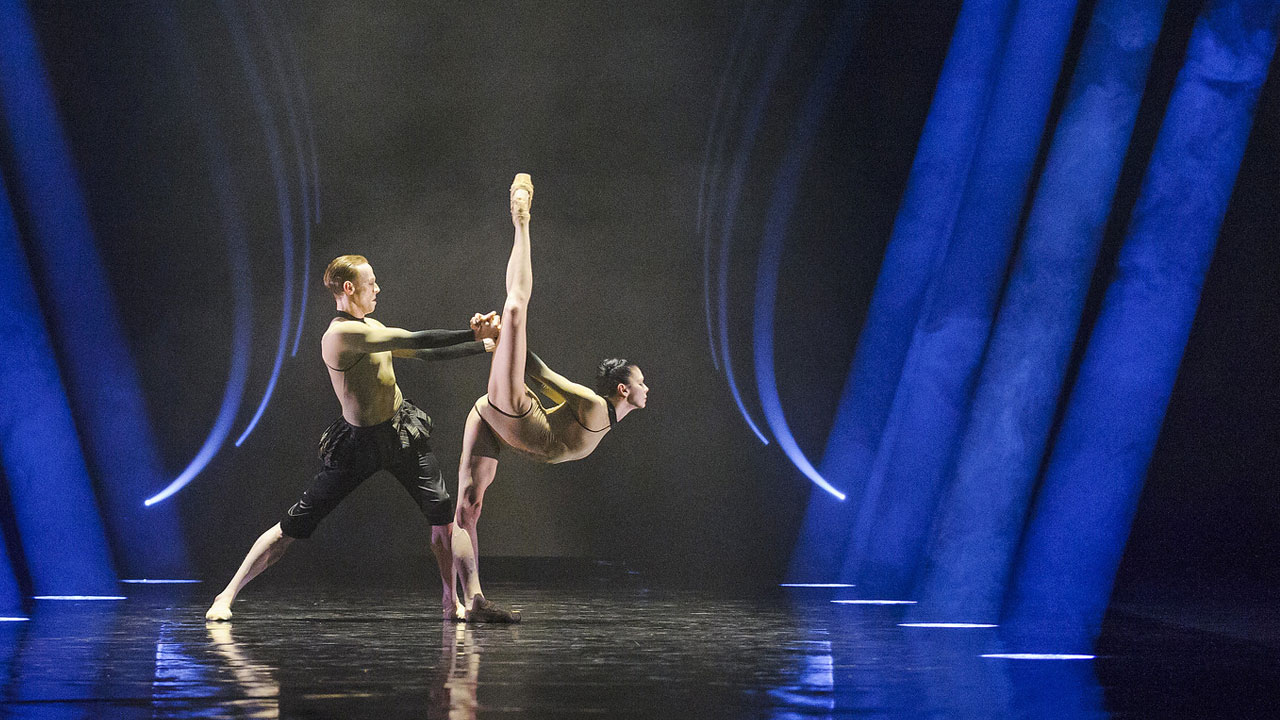
At one point during the rehearsal, the theatre quiets for one of the musical’s most intimate scenes: Billy dances a pas de deux with his imagined future self. That ‘future self’ is played by Lim Sun-u – a principal dancer with Universal Ballet, but once a young Billy himself. Lim first performed the role as a child in the 2010 South Korean premiere. Now 26, he returns to the same story from the opposite side.
‘Balancing the ballet company and Billy Elliot is physically demanding,’ he tells me backstage, still catching his breath. ‘But it’s also shaped who I am as a dancer.’ Having started ballet at six years old, Lim auditioned for Billy Elliot two years later from the recommendation of his ballet teacher. ‘When I was acting as Billy on stage, I reminded myself to keep my dream of becoming a ballet dancer just like Billy.’

Lim did just that, placing eighth at the prestigious Prix de Lausanne in 2017 and earning numerous awards at home. But the musical, he explains, demands far more than classical technique. The broader physical vocabulary continues to inform his work on the classical stage. ‘More than anything, it was the acting training,’ he says. ‘The directors would give detailed notes – what Billy is feeling, where to breathe, how to shape each line. That stayed with me. Ballet is storytelling too.’

‘The audience sees Billy grow over three hours. But years of work are compressed into that time’
Shin Hyun-ji
Nearby, the production’s choreographer, Shin Hyun-ji, watches with a quiet familiarity. When Lim played the young Billy many years ago, Shin was the adult Billy. Now, he guides a new generation through the process. ‘The audience sees Billy grow over three hours,’ he says. ‘But what they’re really seeing is years of work compressed into that time.’
Shin believes that it’s this grit and determination from young performers that ‘makes this musical so moving.’ He adds, ‘the process of getting the choreography down is incredibly demanding. They train anywhere between a year and a half to two years, starting from the very basics, to fully embody the role.’
A few weeks after the open rehearsal, the musical opens in Seoul. On a cool Sunday evening, families and couples fill the hall. What stands out is the number of young children, anticipation written across their faces. Before the show, they gather around towering Billy Elliot posters, posing for photos and crowding into themed photo booths.
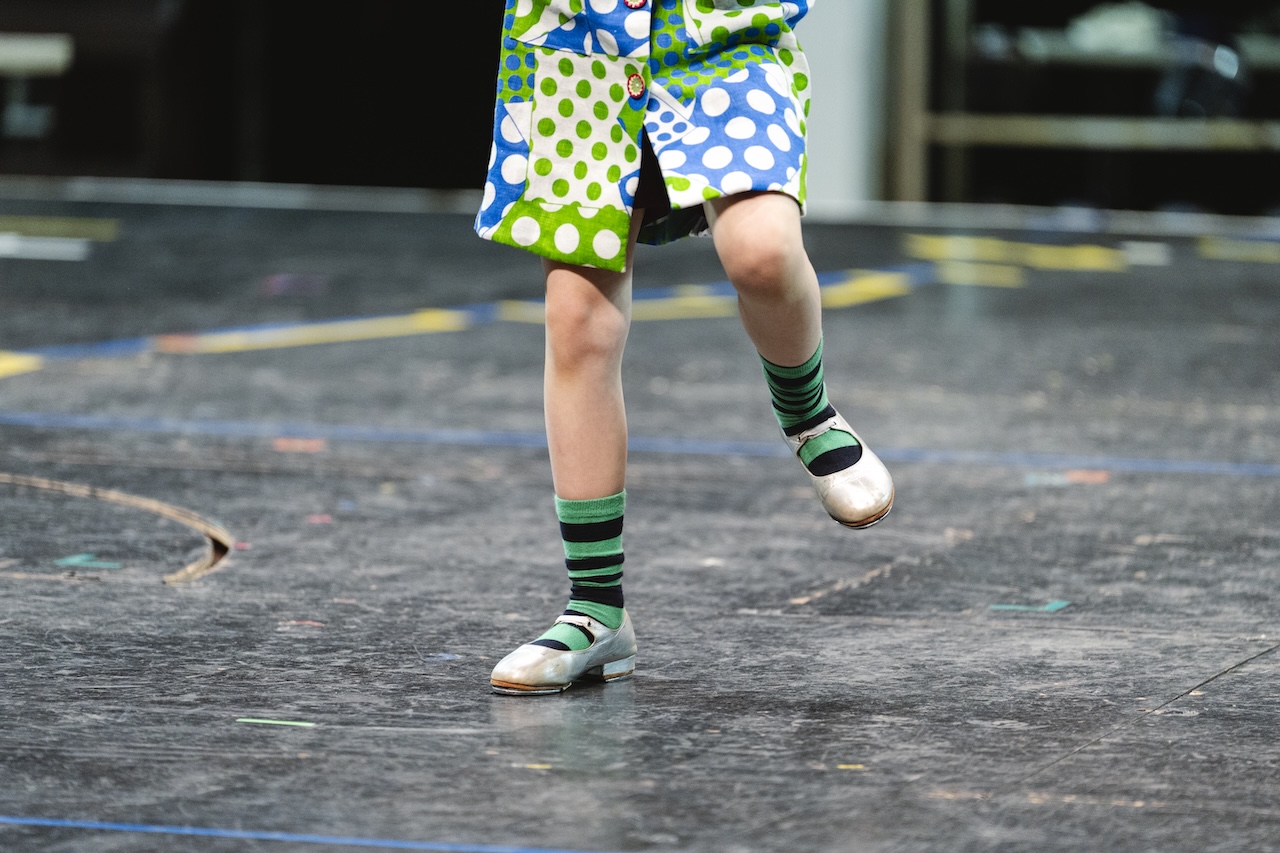
When the curtain rises, the auditorium falls still. After a technical issue brings the performance to a halt in the middle of crowd favourite Expressing Yourself, the boys playing Billy and Michael launch into their tap sequence and the audience claps along in unison. At the intermission, a young boy ahead of me tugs at his mother’s sleeve and whispers a single word: ‘Legend.’
What the audience doesn’t see is everything that came before: the months of repetition, the discipline, the quiet accumulation of effort. In South Korea, that unseen labour may be what makes Billy Elliot feel most at home.
LOOK
Rehearsing Billy Elliot. Photos: SuhJeen Moon for Dance Gazette
WATCH
Seoul’s new Billys in rehearsal

David D Lee is a freelance journalist based in Seoul, writing for publications including the South China Morning Post, Al Jazeera, Nikkei Asia and Billboard.
SuhJeen Moon was born in Seoul. She moved to New York in 2022 to study Documentary Practices & Visual Journalism at the International Center of Photography, and returned to Seoul in 2024.
Tell us your favourite musicals dance number!
Send your feedback