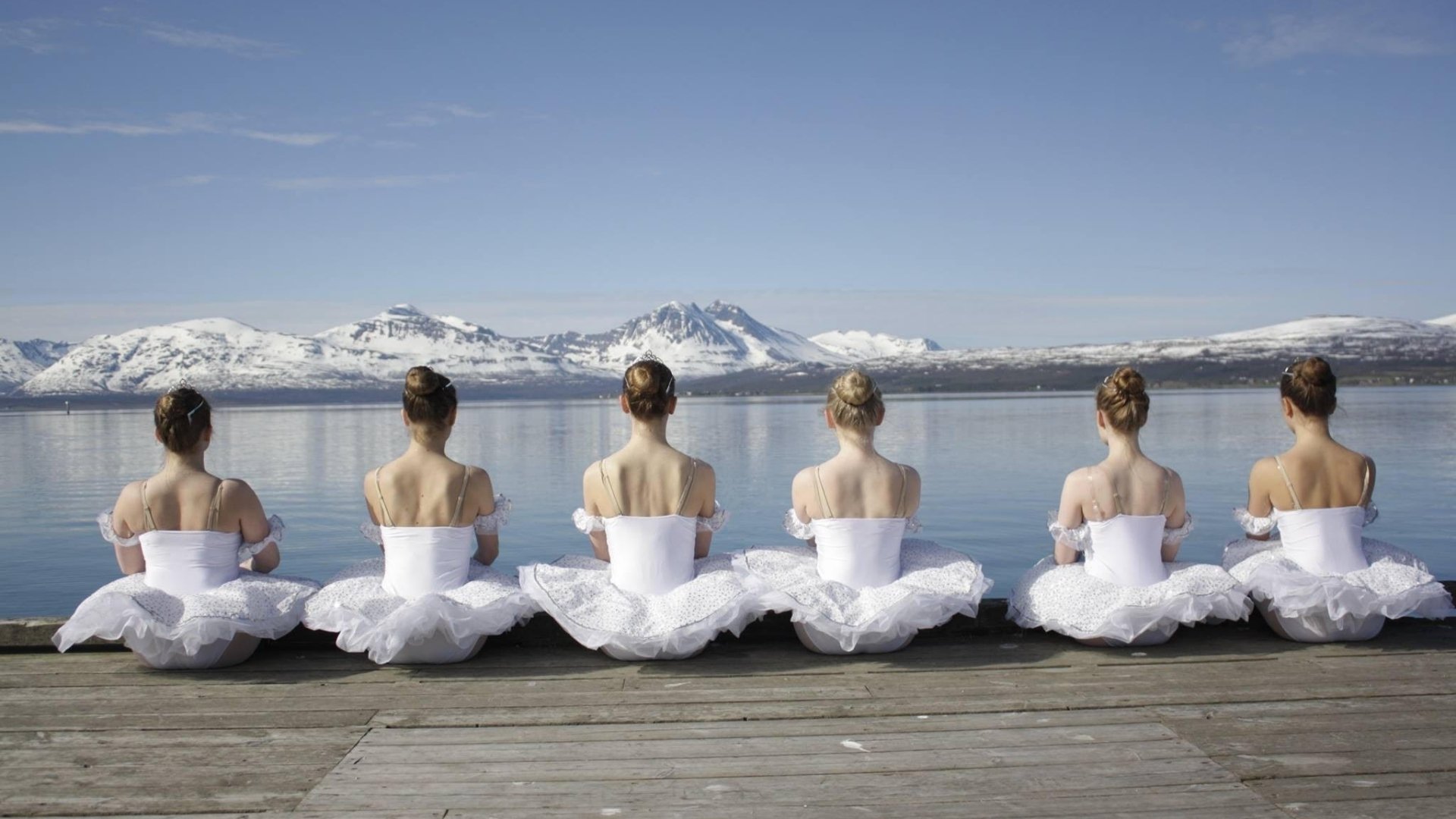
‘It’s not a natural occurrence to dance ballet in Norway,’ says Sally Parkinson, principal of dance at the Kulturskole in Tromsø. During the past three years, Royal Academy of Dance exams have been held in 69 countries, with Tromsø – located 350 km north of the Arctic Circle and known as the Gateway to the Arctic – the most northerly location they take place.
The dance academy was founded in the 1980s and incorporated into the Kulturskole later that decade. While it has been a challenge to keep it going, after almost 40 years it’s now very well established. Even so, the formality of the exam process can feel alien to students, Parkinson explains. Doing exams of this kind is unusual in Norway. ‘It just goes against everything that we just stand for,’ she says. ‘There are no uniforms in Norway either.’ This can result in some resistance: ‘we sometimes get hassle as to why it should be like this.’ However, Parkinson believes this formality is part of the value of the RAD exam process. ‘I probably do it more formally than anybody, because I think it’s of such value to the children.’
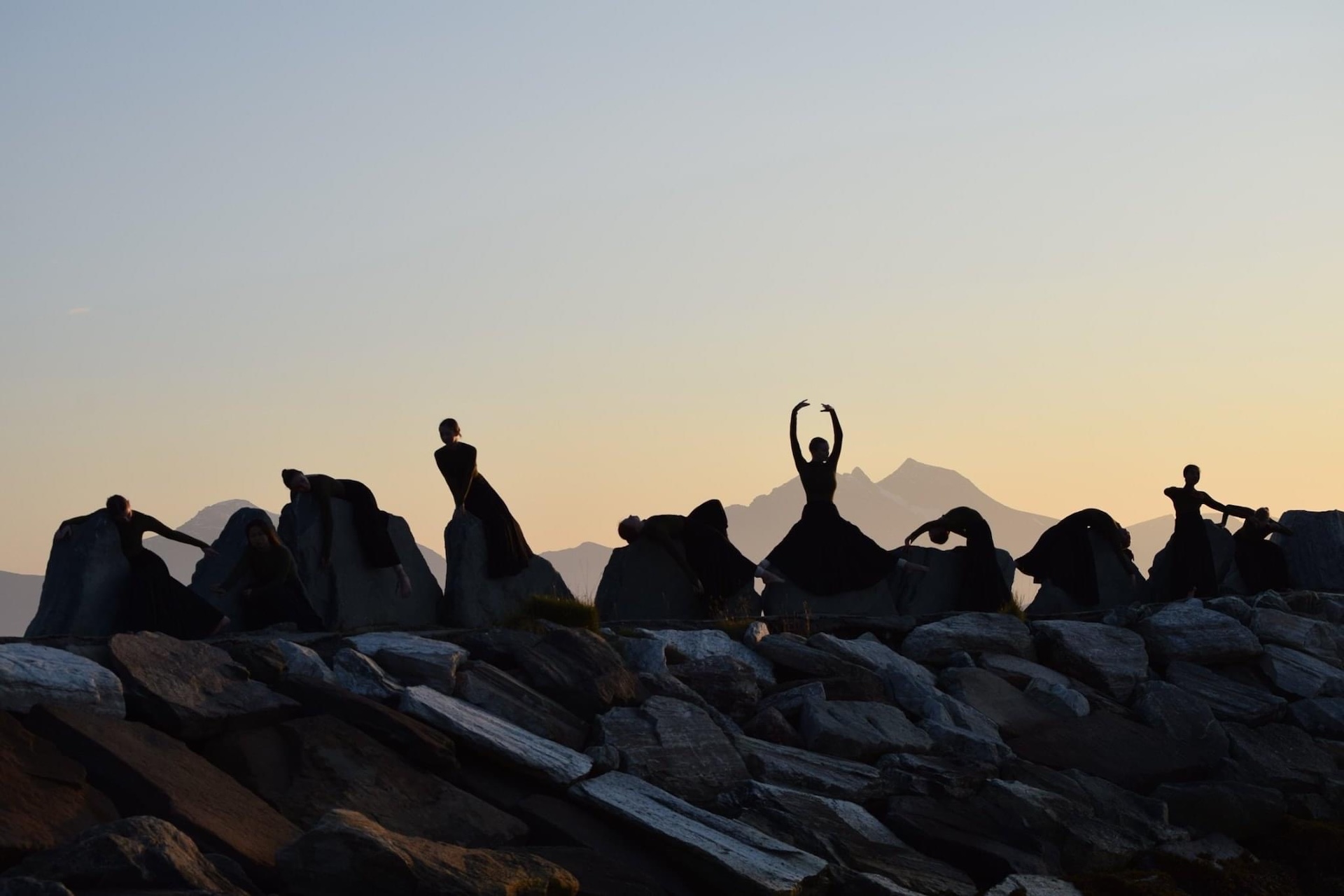
‘Ballet teachers don’t grow on trees around here’
Sally Parkinson
Tromsø’s northerly location has an impact on the process. ‘Ballet teachers don’t grow on trees around here,’ says Parkinson and during the polar night, which lasts from late November to mid-January, the sun doesn’t rise above the horizon. As a result, students can tire easily. ‘It’s quite demanding for them,’ she says. Of course, she adds, when summer comes, ‘it’s light all the time and so much easier to prepare.’
Located in the Pacific Ocean, about 3,200 km southwest of the US mainland, Hawaii does not endure polar conditions, though the island faces its own challenges. Honolulu’s Royal Academy of Ballet, Hawaii’s only RAD certified school, was founded by Dr Vivienne Li, whose varied training background includes a stint at RAD headquarters in London. With the Academy, founded in 2010, the goal was to bring an internationally recognised standard of ballet training to Hawaii. ‘The vision was for the children here to have the same quality of training and accreditation as students in London.’
The school started with just 11 students but has grown steadily: in 2022, they entered 101 students for an exam. They offer two pathways to students: awards and exams. While some parents can be resistant to having their children graded, she says, ‘I think it’s important to introduce it as a milestone. It’s healthy for a child to celebrate their journey.’
Based in the Office of Hawaiian Affairs, a building with decorative paintings that give it a very Hawaiian feel, the Academy occupies a place of cultural intersection, between European and Hawaiian. ‘On the day of the exam, you can hear classical music, you can hear The Sleeping Beauty playing in the background,’ she says, ‘and sometimes the students come straight from hula class.’ Occasionally, they will inadvertently create their own hybrid form: ‘you will see some of the same gestures in their performance.’
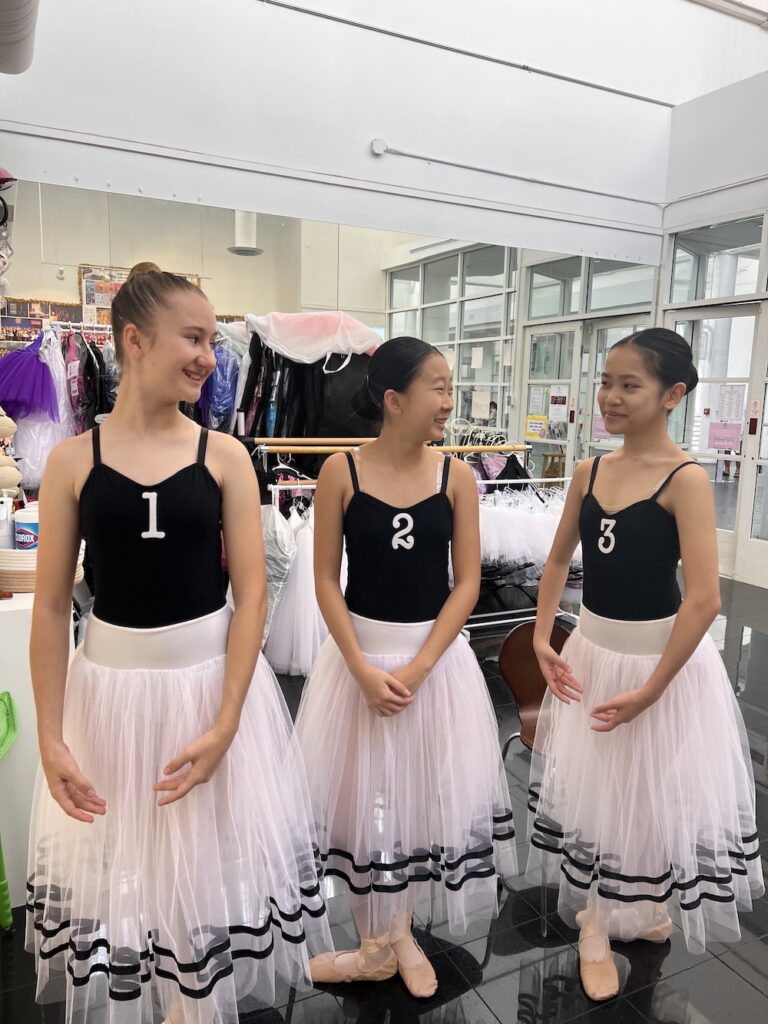
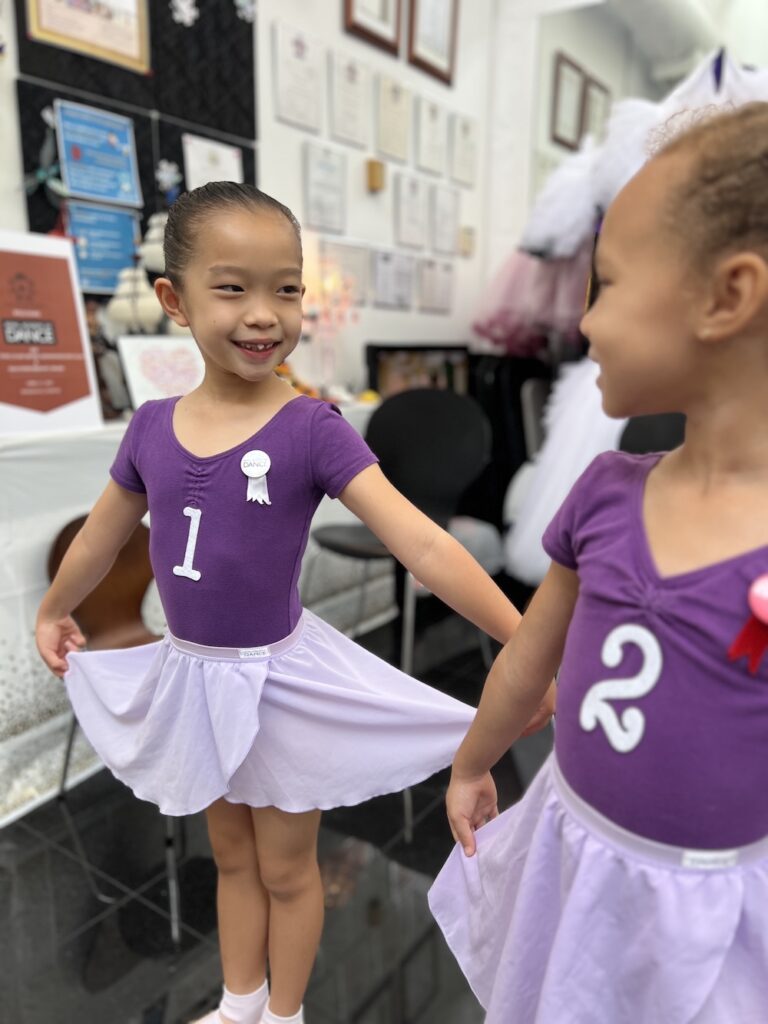
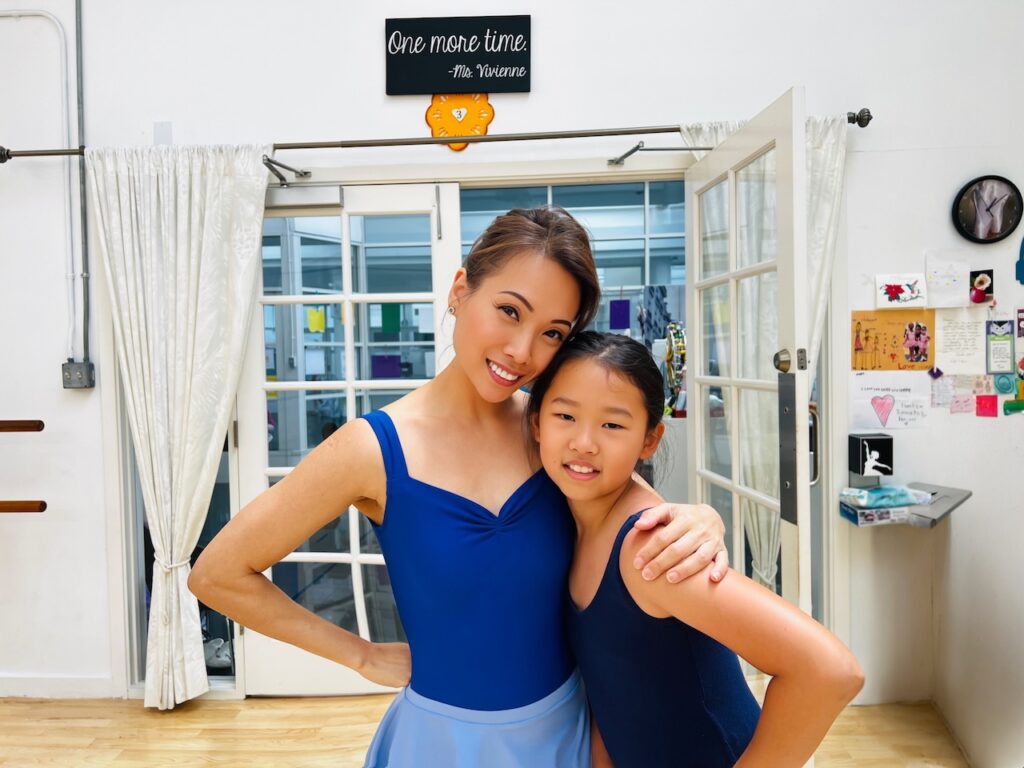
As with Norwegians, the formality of the process can prove jarring to students and parents. ‘We try to explain the framework, the reason why the exams are so rigorous and the amount of hours that the students have to train,’ she says. This approach can have benefits in other areas, informing a student’s approach to their studies. One student, who took exams until Advanced level, went on to graduate from MIT and ended up working on neurological disorder, her passion for dance intertwining with her passion for biology. ‘You can be both a dancer and neuroscientist. I think that’s wonderful.’
‘For many teachers and students around the world, the regular visit from an RAD Examiner remains their strongest link to the RAD,’ says Jennifer Hale, Chief Examiner. ‘We hope that this face to face interaction encourages a feeling of connection, support and belonging to the wider RAD community. This also provides examiners with a breadth of understanding of the evolving landscape of dance education, the daily challenges and successes experienced in the studio and the varying conditions and cultural differences of the many places they visit. Our strength and impact as a global organisation is down to our members and examiners providing an integral role in fostering that sense of connection.’
Invercargill is the southernmost city on Aotearoa New Zealand’s South Island – and also the location for the world’s most southerly RAD exams. With a population of 59,000, the city is home to La Muse, a dance studio established in 2009 by Hana Skeggs and Gina Stevens, that specialises in classical ballet, American jazz and contemporary dance and has around 380 students.
The exam process is one of celebration and achievement, ‘and every kid or every dancer that goes into the exam comes out feeling good,’ says Stevens. While for many of their students dance is simply a fun pastime, some do go on to further training and professional careers. One recently began her career with the Royal New Zealand Ballet. ‘That’s the icing on the cake,’ says Skeggs.
‘Geographically, we’re quite isolated,’ she continues. While everything in town is relatively accessible, if students need to travel beyond Invercargill for a competition or summer school, this can present challenges. While there are direct flights to Auckland and Christchurch, to go anywhere else in the country can get very expensive. ‘Things are accessible on a local scale, but not on a larger scale,’ she adds.
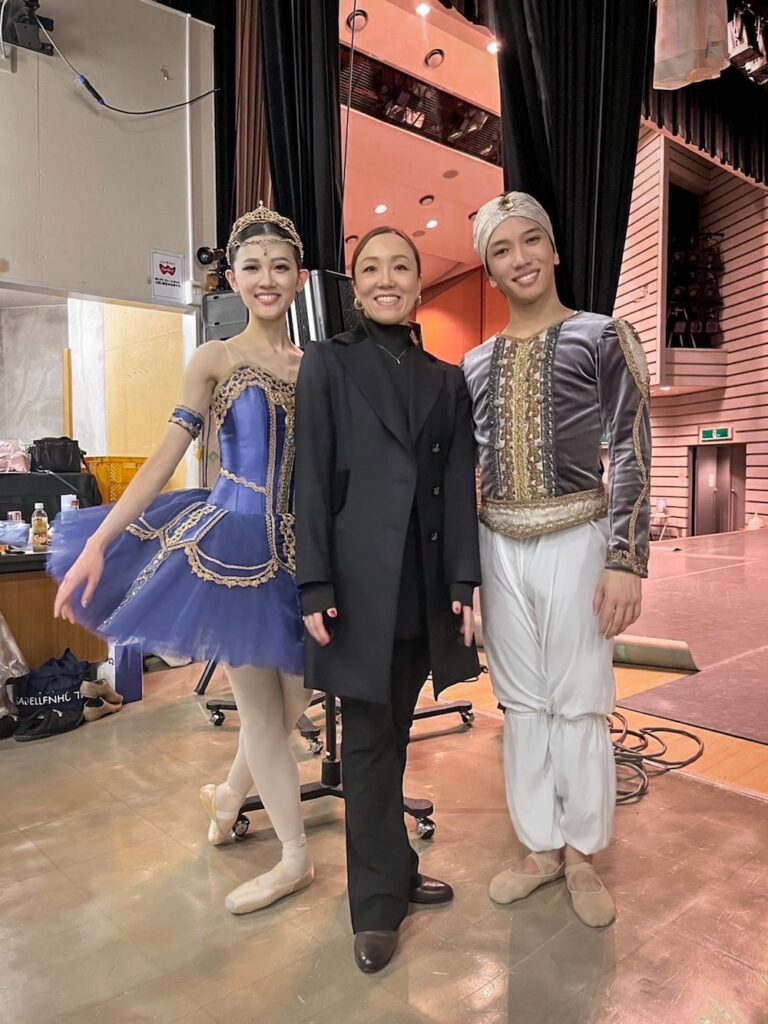
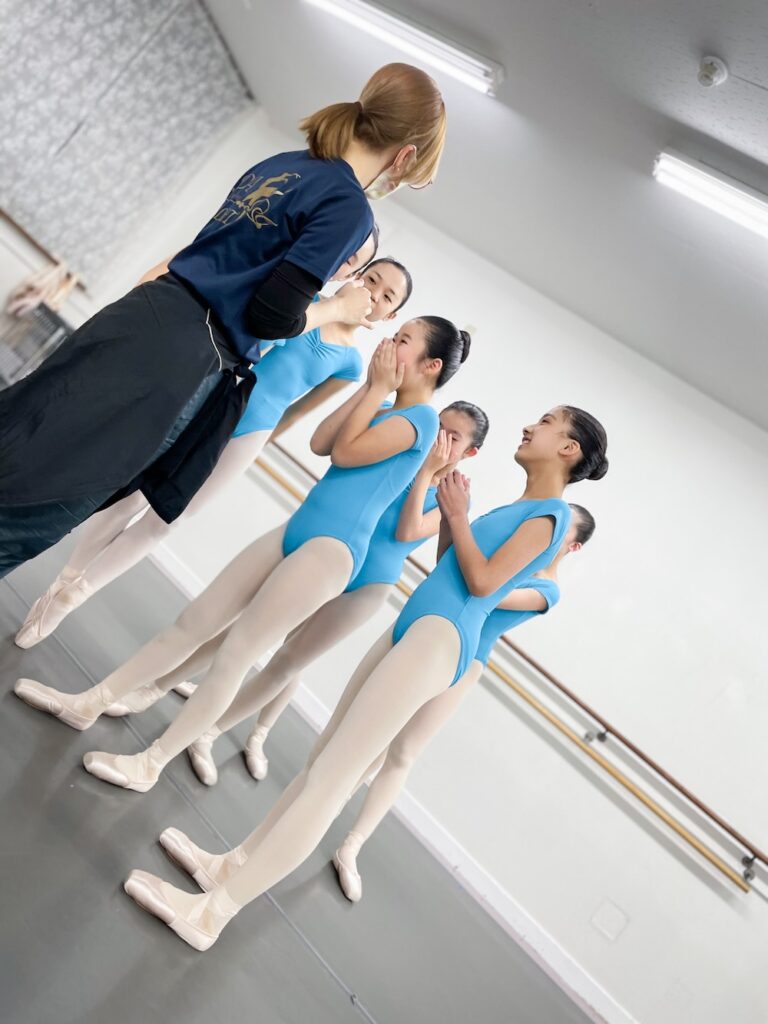
Studio Dream Art was established in 2009 by Mariko Iwasaki in Okinawa, Japan’s southernmost prefecture. It provides RAD ballet training from Primary level as well as offering classes in yoga and Pilates, ‘with the aim of developing balanced, healthy bodies that support long-term dance training,’ explains Iwasaki.
‘Exams are an important milestone for a child to celebrate their journey’
Vivienne Li
‘We began offering RAD examinations in 2020, and I am confident that the introduction of the RAD system has contributed significantly to the school’s growth,’ she says. ‘Both teachers and students are able to clearly see their progress. This shared framework has helped us grow not only as performers, but also as educators working within the RAD syllabus.’
There are currently around 70 students enrolled at the school and ‘most students who participate in examinations aim to achieve Intermediate level, which we see as an important milestone in their ballet education.’ Those who wish to pursue ballet professionally or work within the dance field challenge themselves further by progressing to Advanced levels.
‘Each year brings new discoveries. Students and teachers enjoy learning together’
Mariko Iwasaki
Studio Dream Art also recently engaged in an international exchange with RAD-affiliated schools in the Philippines: ‘because the students were learning the same RAD choreography, they were able to connect immediately, overcoming language barriers with ease. Witnessing how quickly they built friendships through shared movement was deeply moving and reaffirmed the universal power of dance education.’
The clarity of RAD levels has also proved extremely helpful when students transfer schools, she notes, as their training standard is easily understood both nationally and internationally. ‘Our students approach RAD examinations with a strong sense of pride,’ she says. She praises the well-balanced structure that ‘values process, growth, and artistry, allowing students to develop confidence and presence naturally when performing in front of others.’
The exam process can seem daunting, but she believes it creates ‘a form of positive and motivating tension.’ It is challenging and yet is structured in such a way that ‘difficulties can always be overcome through continued effort. Each year brings new discoveries, and both students and teachers genuinely enjoy the learning process together.’
RESOURCES


Natasha Tripney is international editor at The Stage.